Best 3D website templates with source code
By Ruturaj Jena, Brand Motion Studios · Updated
A good 3D website template is a finished website, not a demo scene: real-time 3D that the visitor can move, source code that runs the day you get it, and your brand in one place so you are not hunting through components to change a name.
These are the 3D website designs we would start from, picked by what you are building. We made them, so we know exactly what is inside each one; every one has a live preview, the exact prompt that built it and its complete source. For the whole collection, see 3D website design.
The short answer
| Best for | Template | Built with |
|---|---|---|
| Brand storytelling | BR-SOLAR | Next.js, React Three Fiber, GSAP, Lenis |
| A product drop, with no build step | LOGOFF 01 | Plain HTML, CSS and JavaScript with three.js |
| Jewellery and luxury e-commerce | BR-TAARA | Next.js, React Three Fiber, GSAP, Lenis |
| Logistics, travel and one unbroken camera move | BR-Corio | Three.js, GSAP, plain HTML, CSS and JavaScript |
| Gadgets and hardware | Vitrine | React and Three.js |
| A tech or AI device launch | NEON | Vite and React Three Fiber |
| A personal portfolio | Augmented Portfolio | Vite and three.js, no framework |
| Architecture, construction and real estate | BR-MERU | Next.js, React Three Fiber, GSAP, Lenis |
| Food and drink brands | BR-KOKOA | Next.js, React Three Fiber, GSAP, Lenis |
| 3D for a site you already have | Single-file 3D scenes | One HTML file, Three.js or raw WebGL |
How we picked them
- Real-time 3D, not a video of it. The 3D is rendered live in the browser, so it stays sharp at any size and answers the visitor. Some of our best sites are scroll-scrubbed video; they are not on this list.
- Source that runs as it is. Either npm install and run, or open the folder. No missing assets, no paid 3D models to licence: most of these generate every model in code.
- Your brand in one place. The name, copy, products and colours sit in one data or config file.
- Phones considered. Lighter effects on small screens, real HTML text, reduced-motion respected.
- The prompt included. So you, or Claude Code, Cursor or Antigravity, can rebuild it, extend it or take it somewhere new.
The best 3D website templates, by what you are building
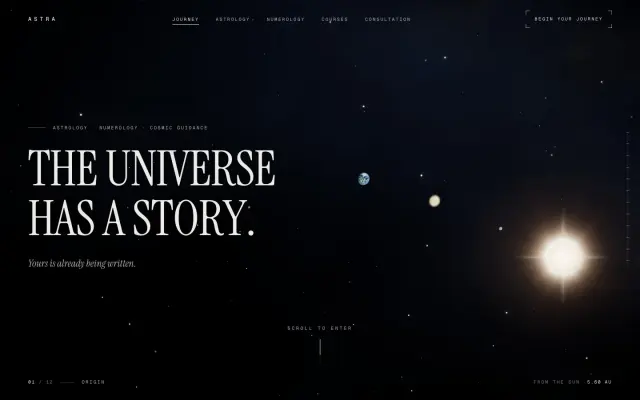
Best for: Brand storytelling
BR-SOLAR
Next.js, React Three Fiber, GSAP, Lenis
One scroll is one camera flight: from the Sun past every planet, through the zodiac, a nebula and a black hole that bends the sky behind it. It is the clearest example of what real-time 3D can do that video cannot: the visitor types a date of birth and a birth chart is plotted live in the browser. There is no image, video, model or texture file in it; the planets are shaders.
- Complete Next.js and React Three Fiber source, with the brand, the courses and the navigation each in one data file
- All the GLSL shaders in full, and a keyframed scroll camera you can re-route
- Quality profiles that scale the effects to the device, with reduced-motion, no-WebGL and no-JavaScript fallbacks
Prompt $5.99 · Prompt and source $18.99Live preview and source →Storytelling website templates
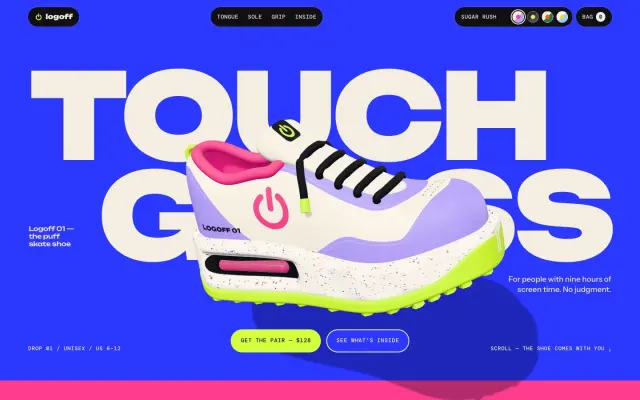
Best for: A product drop, with no build step
LOGOFF 01
Plain HTML, CSS and JavaScript with three.js
One 3D sneaker stays on screen while colour blocks scroll past behind it; it turns to show each feature, then comes apart into labelled parts and back together. A picker recolours the shoe live and the copy changes with it. If you want a 3D product page without a framework, start here: serve the folder and it runs.
- Four hand-written files with three.js included: no install, no build
- A shoe modelled in code, with an exploded view driven by one number
- Colourways in one list: add an entry and it appears in the picker
Prompt $5.99 · Prompt and source $15.99Live preview and source →Product drop website templates

Best for: Jewellery and luxury e-commerce
BR-TAARA
Next.js, React Three Fiber, GSAP, Lenis
A rough diamond is laser-scanned and cut into a brilliant with ray-traced refraction and real fire, set into a gold ring and boxed. Then it becomes a store: a collection that spins in the light and a ring configurator whose price updates as you choose the shape, metal and carat. Every stone, ring and box is drawn in the browser, so there are no product photos to replace.
- Complete source with the brand, the collection, the metals and every line of copy in one data file
- Procedural diamonds: a 57-facet brilliant and an emerald cut
- A live ring configurator with a tweening price
Prompt $5.99 · Prompt and source $18.99Live preview and source →Jewellery & jewelry website templates
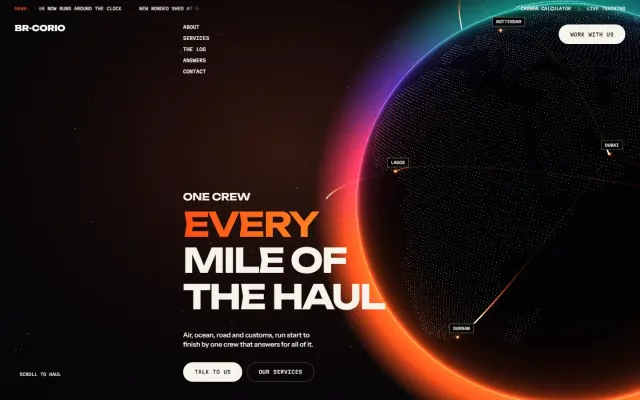
Best for: Logistics, travel and one unbroken camera move
BR-Corio
Three.js, GSAP, plain HTML, CSS and JavaScript
A reach stacker loads a truck, the truck takes the road to the quay, the camera climbs over a container ship and a freighter takes over above the clouds, all in one camera move with no cuts. Every machine, the globe, the ship and the plane are generated in code. Scroll back up and it plays in reverse.
- Complete static source with no build step, and a README on where to change the brand
- The whole sequence as editable keyframes, and colours as CSS custom properties
- The two video prompts and ffmpeg commands behind the ocean
Prompt $9 · Prompt and source $18Live preview and source →Logistics website templates
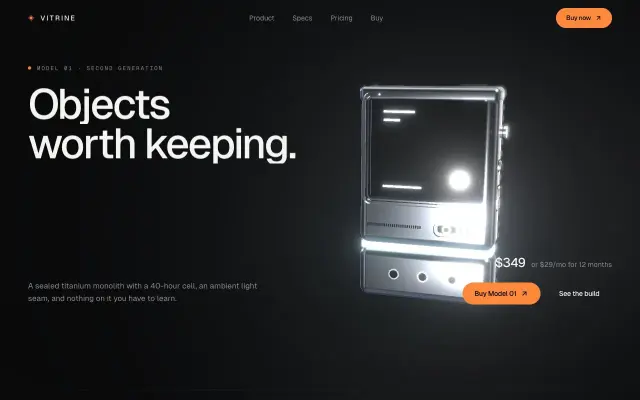
Best for: Gadgets and hardware
Vitrine
React and Three.js
A scroll-pinned turntable: the product rotates as you scroll, then explodes into labelled parts with drawn-on callout lines, and a colour configurator previews material swaps live. The gadget is procedural, so it runs with no asset files, and when you have your own model you swap in the .glb by changing one path.
- One config file for the rebrand, including the one-line .glb swap
- The scroll-pinned rotation and exploded-view choreography
- The build prompt with its lighting rig and motion spec
Prompt $4.99 · Prompt and source $14.99Live preview and source →Hardware website templates
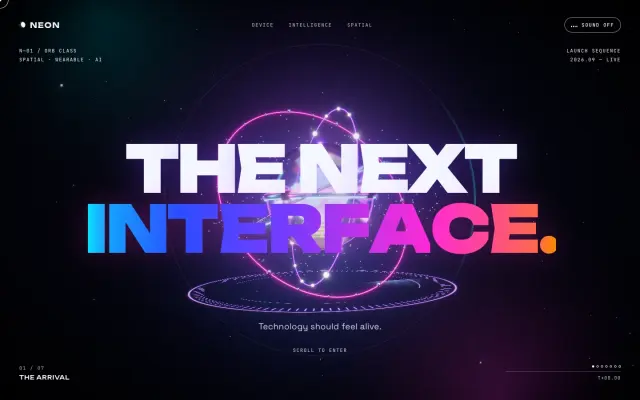
Best for: A tech or AI device launch
NEON
Vite and React Three Fiber
An AI device told as one continuous camera move: it flies apart into an exploded engineering view with live labels, dissolves into a particle structure that follows the cursor and reassembles for the final shot. One story clock drives the camera and every chapter, which is why it stays smooth where stacks of scroll triggers stutter. Phones get fewer particles and a lighter effects chain.
- Complete Vite and React Three Fiber source with no assets to download
- The scene director, and why it beats dozens of separate scroll triggers
- Sound wired to story events, silent by default
Prompt $5.99 · Prompt and source $15.99Live preview and source →AI website templates
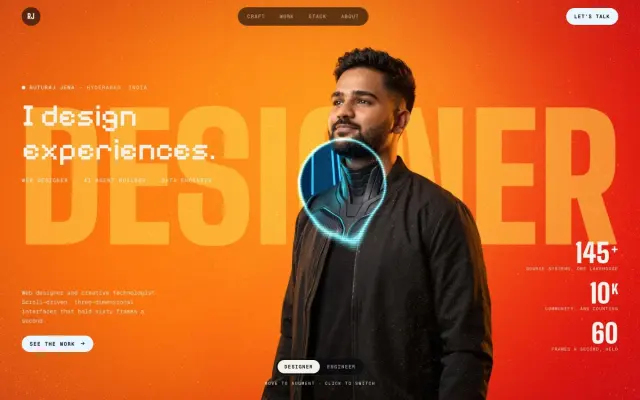
Best for: A personal portfolio
Augmented Portfolio
Vite and three.js, no framework
Two portraits of the same person share the hero, and the pointer carves a liquid window from one to the other. Scrolling turns the portrait into particles that re-form as a new 3D shape for every section. It ships with the prompts to generate the portrait pair from your own photo, so it becomes yours rather than a template with a stranger's face.
- Complete Vite and three.js source: one renderer, raw GLSL
- A particle system that morphs between shapes on scroll keyframes
- The asset prompts and the scripts that prepare your own portraits and meshes
Prompt $5.99 · Prompt and source $15.99Live preview and source →Portfolio website templates
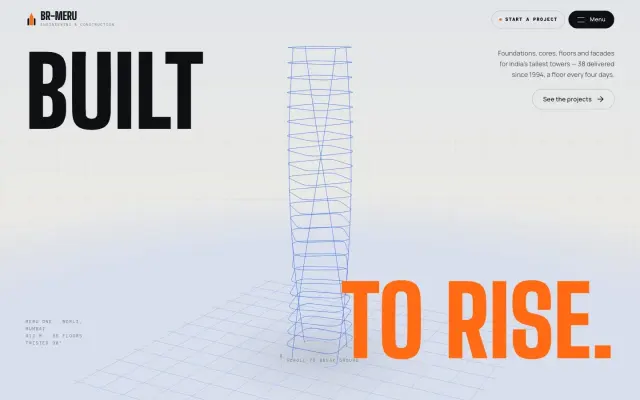
Best for: Architecture, construction and real estate
BR-MERU
Next.js, React Three Fiber, GSAP, Lenis
A tower is dug, piled, cored, floored, glazed and topped out, then lit against a night skyline as the sky turns from day to night. The page that follows has projects that build themselves floor by floor when tapped, and a tower configurator for floors, form and facade with a day-night switch.
- Complete source with the brand, projects, forms, facades and copy in one data file
- A parametric tower with a curtain-wall shader that lights its windows at night
- A live tower configurator
Prompt $5.99 · Prompt and source $18.99Live preview and source →Architecture website templates

Best for: Food and drink brands
BR-KOKOA
Next.js, React Three Fiber, GSAP, Lenis
A cacao pod cracks open, the beans roast and fly into a bar that snaps, and it is wrapped in gold foil and sleeved, all rendered live rather than played as video. Tapping any bar in the shop slides its sleeve off. Even the packaging prints and the product photos are drawn in the browser.
- Complete source with the brand, the products and every line of copy in one data file
- A procedural 3D kit: the pod, the beans, the bar, the foil and the sleeve
- Print layers for the packaging, so foil reflects and the wordmark throws a shadow
Prompt $5.99 · Prompt and source $18.99Live preview and source →Food & drink website templates
3D for a website you already have
Not every brand needs a whole 3D site. These are single HTML files with nothing to install: drop one in as a hero or a section, in any site, Webflow or Framer page. Every colour, count and speed is in one config block, and each has preset looks you can switch live.
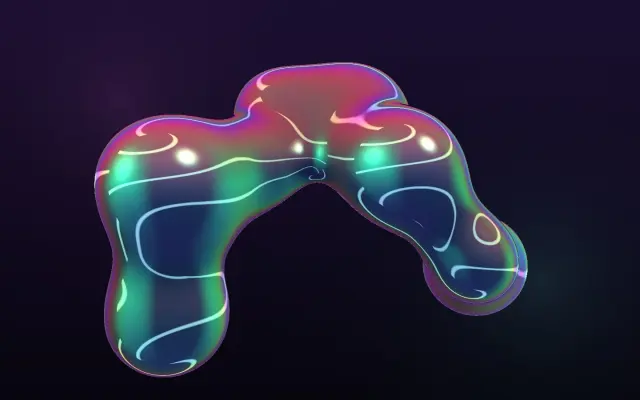
Liquid Chrome
Iridescent liquid metal you stir with the cursor. Raw WebGL2, no dependencies at all: the lightest way to put real 3D in a hero.
Prompt $3.99 · with source $14.99
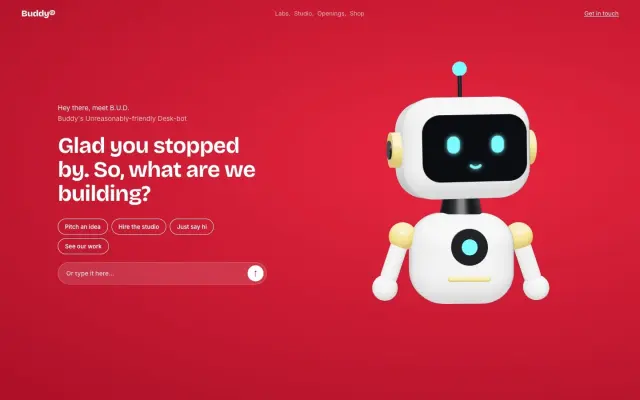
Buddy Bot
A friendly robot mascot that reacts to every button in a chat-style hero. A whole landing page in one HTML file.
Prompt $3.99 · with source $14.99
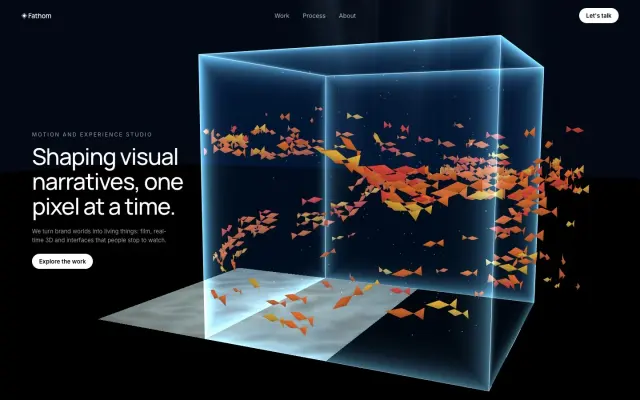
Glass Aquarium
A glowing cube of ocean whose fish dodge the cursor and swim out of the tank as you scroll. A studio landing page in one file.
Prompt $3.99 · with source $14.99
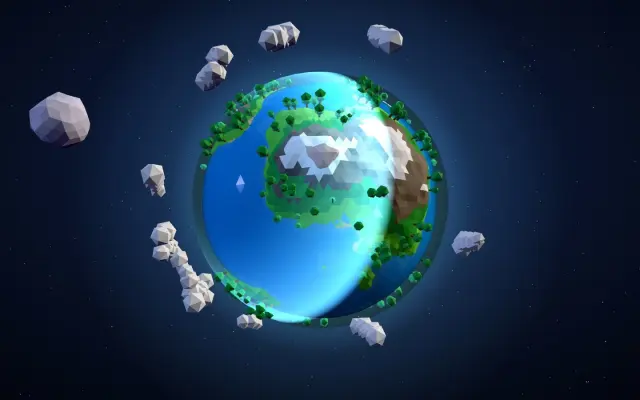
Tiny Planet
A low-poly world you spin and plant trees on, regenerated at a click. For travel, eco, games and kids' brands.
Prompt $3.99 · with source $14.99
Three.js, React Three Fiber or plain WebGL?
React Three Fiber is Three.js written as React components. Choose it if your site is already Next.js or React: the 3D shares state with the rest of the page, so a configurator or a cart is ordinary React. BR-SOLAR, BR-TAARA, BR-MERU, BR-KOKOA and NEON are built this way.
Plain Three.js needs no framework and often no build step. Choose it for a one-page site you want to host anywhere, or hand to a client who does not run Node. LOGOFF 01, BR-Corio and the Augmented Portfolio are built this way.
Raw WebGL is the smallest and fastest, with no library at all, and the hardest to change by hand. It suits one effect done perfectly, like Liquid Chrome, rather than a scene full of objects.
Spline and similar tools are quicker for a first scene, but the result lives in their editor and their runtime. With source code, the 3D is yours to change, host and hand over.
What to check before you buy any 3D template
- Open the live preview on your phone. A 3D site that only works on a desktop graphics card is half a website.
- Ask whether it is 3D or video. Video looks the same in a screenshot, but it cannot react to the visitor and it is heavy to load.
- Find out where the models come from. Bought 3D models carry their own licences; models generated in code carry none.
- Check where the brand lives. One data file is a quick rebrand; copy scattered through components is a week of work.
- Read the licence. You want commercial use, including client work, in writing.
How to make a 3D template yours
- Run it as it is first, so you know what working looks like.
- Change the brand, the copy and the products in the data or config file.
- Change the colours: in the config, or as CSS custom properties.
- For a bigger change, a new model or a new chapter, give your coding agent the prompt and the source and describe what you want. The prompt tells it how the site was meant to work, so it changes it without breaking it.
- Check it on a real phone, then deploy: Vercel or Netlify for the Next.js and Vite builds, any static host for the plain HTML ones.
3D website templates, answered
Where can I find 3D website templates with full source code?
+
Every design on this page comes with its complete source: the finished project, which runs as it is, plus the exact prompt that built it. Many 3D templates elsewhere turn out to be a video of 3D, a Spline embed you can only edit in Spline, or a starter scene rather than a whole website. These are whole websites in Three.js or React Three Fiber.
What is the difference between the prompt and the source?
+
The prompt is the staged brief that built the site: give it to Claude Code, Cursor, Antigravity or Windsurf and it builds its own version, which you can steer as it goes. The source is the finished project itself, ready to rebrand and ship. The source always includes the prompt.
Do I need to know Three.js to use a 3D website template?
+
No. The brand, the copy and the colours sit in one data or config file, so a rebrand is editing text. Changing the 3D itself, a model or a camera move, is where Three.js knowledge helps, or where you hand the prompt and the source to a coding agent and describe the change.
Will a 3D website work on phones?
+
It should, and these are built for it: the text stays real HTML, reduced-motion settings are respected, and the heavier builds scale their effects down on phones. BR-SOLAR, for one, also falls back gracefully when WebGL is not available. Whatever template you choose, open its live preview on your own phone first.
Can I add 3D to a Webflow, Framer or WordPress site?
+
Yes, with the single-file 3D scenes. Each is one HTML file, and its embed mode strips the interface so it sits cleanly in an iframe as a hero or a section. The full websites are their own projects, which you deploy to Vercel, Netlify or any host.
Can I use these templates for client work?
+
Yes. The licence covers unlimited personal and commercial projects, including paid client work. You cannot resell the prompt or the source files themselves.
How much does a 3D website template cost?
+
3D scenes start at $3.99 for the prompt, and a full 3D website's source from $14.99; each design's page shows its price. All-Access includes every design in the store, 3D and otherwise.